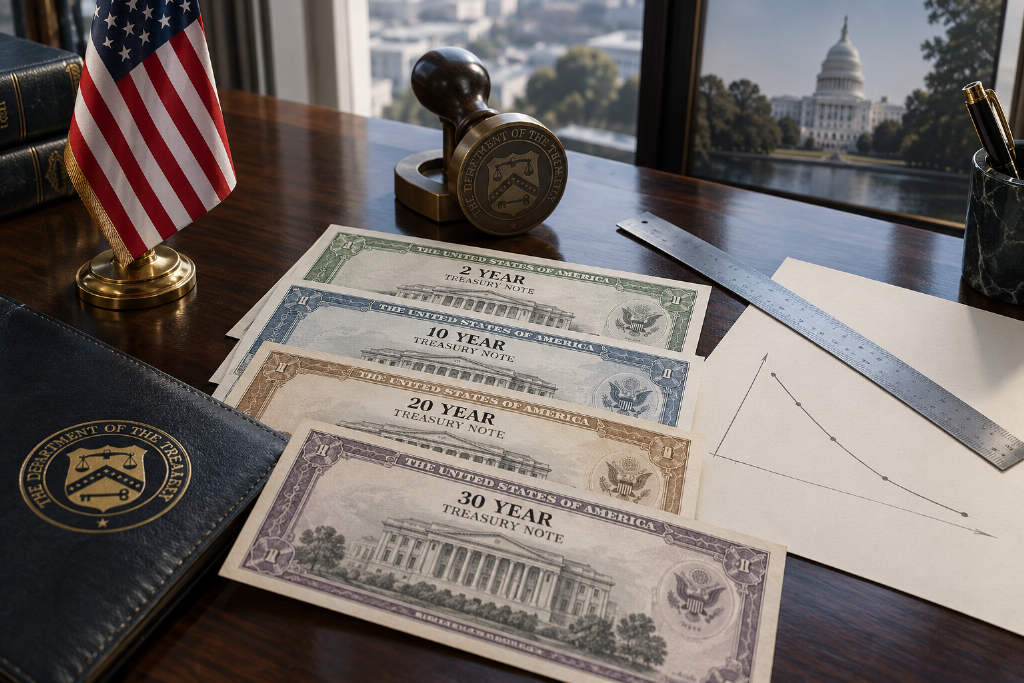
US Treasury2026-10-01 15:27:44US Treasury yields fall intraday, led by the 2-year noteUS Treasury yields moved lower during the day, according to ChainCatcher. The 2-year Treasury yield posted the biggest decline among the tenors mentioned, falling 7.28 basis points to 4.814%. The 10-year yield also edged lower, dropping 2.07 basis points to 5.272%. Longer-dated maturities showed smaller moves. The 20-year Treasury yield fell 1.19 basis points to 5.674%, while the 30-year yield slipped 0.58 basis points to 5.633%. The update covers four key points on the US Treasury curve — 2-year, 10-year, 20-year, and 30-year maturities — and shows all of them trading lower on the day.60
Federal Reser2026-10-01 13:27:27TS Lombard’s Steven Blitz says the Fed repeated an “original sin” and the 10-year Treasury yield could reach 8%TS Lombard chief U.S. economist Steven Blitz is warning that the Federal Reserve has repeated what he calls an “original sin”: easing policy before inflation was fully defeated. In his latest report, Blitz argues that Wall Street is thinking too narrowly by focusing on 6% as the next major threshold for the 10-year U.S. Treasury yield. He says 5.75% may only be an interim platform and that 8% is the longer-term destination over the coming years. His case rests on a combination of loose fiscal policy and loose monetary policy, which he says is pushing the floor for both inflation and yields higher in each cycle. Blitz also points to swap spreads as evidence that investors are increasingly pricing fiscal risk rather than simply trading the shape of the yield curve or the path of policy rates. In his view, demand for sovereign bonds is weakening even after accounting for curve dynamics and bank balance-sheet regulation. Blitz does not predict a single asset crash. Instead, he argues that the first thing to break may be investors’ long-held belief that inflation will reliably return to 2% and that buying stocks and bonds on dips will always pay off.20
U.S. data2026-09-30 12:37:43U.S. Treasury 2Y-10Y Yield Curve Steepens to +37.2 Basis Points After Data ReleaseAccording to ChainCatcher, the U.S. Treasury yield curve between the 2-year and 10-year notes steepened after the release of U.S. data, with the latest reading at +37.2 basis points. The brief did not specify which economic data was released, nor did it provide additional market context, timing beyond the release, or related asset moves. The update was published as a 7x24 news flash.310
US Treasuries2026-09-30 03:00:58Jim Bianco Turns Bullish on Treasuries for the First Time in Six Years, Citing a Cushion at 5.2% YieldsVeteran bond bear Jim Bianco has turned constructive on U.S. Treasuries for the first time in six years after the 10-year Treasury yield climbed to 5.27%, its highest level since 2007. Bianco, president and founder of Bianco Research, said buying Treasuries at around 5.2% now offers a substantial cushion, even if yields continue to rise. His shift is not a call that the selloff is over. Instead, he argues that the risk-reward profile has changed materially after the sharp move higher in yields. Bloomberg-compiled data cited in the report showed that if the 10-year yield rises to about 6% over the next year, coupon income would roughly offset the price decline, while a 1 percentage point drop in yields would generate gains that exceed the losses from a 1 percentage point rise. Bianco has already reflected that view in positioning, raising the duration of the active bond index he manages to more than six years, above the Bloomberg U.S. Aggregate Bond Index’s 5.7 years. He said he is entering the market gradually rather than making a single large bet.240
US Treasuries2026-09-28 10:10:26U.S. 10-year Treasury yield rises to 5.234%, highest since mid-2007U.S. Treasury yields moved higher on Sept. 28, with the 10-year yield climbing to 5.234%, its highest level since mid-2007, according to market data from BIT (bit.com). The 30-year Treasury yield rose to 5.542%, marking its highest reading since 2004. The BlockBeats report said the move points to a sharp increase in how markets are pricing long-term risk. It also said concerns have intensified around sticky inflation, the possibility that the Federal Reserve will keep interest rates elevated, and the sustainability of large fiscal deficits and debt. According to the report, higher long-end yields raise long-term borrowing costs for governments, companies, and consumers. It added that such moves typically weigh on equity valuations, tighten global financial conditions, and may restrain economic growth to some extent. The original item also pointed readers to a separate analysis titled "The U.S. yield curve is nearing inversion again — is a recession warning signal being triggered?"220
US Treasury y2026-09-28 00:34:49US Treasury yields rise early Monday, with 2-year at 4.9%US Treasury yields moved higher in early Monday trading, according to market data cited by ChainCatcher from Gate. The 2-year Treasury yield rose to 4.9%, while the 10-year Treasury yield climbed to 5.2%. The update was published by ChainCatcher under the market analysis category. No additional market context or related asset moves were provided in the source note.250
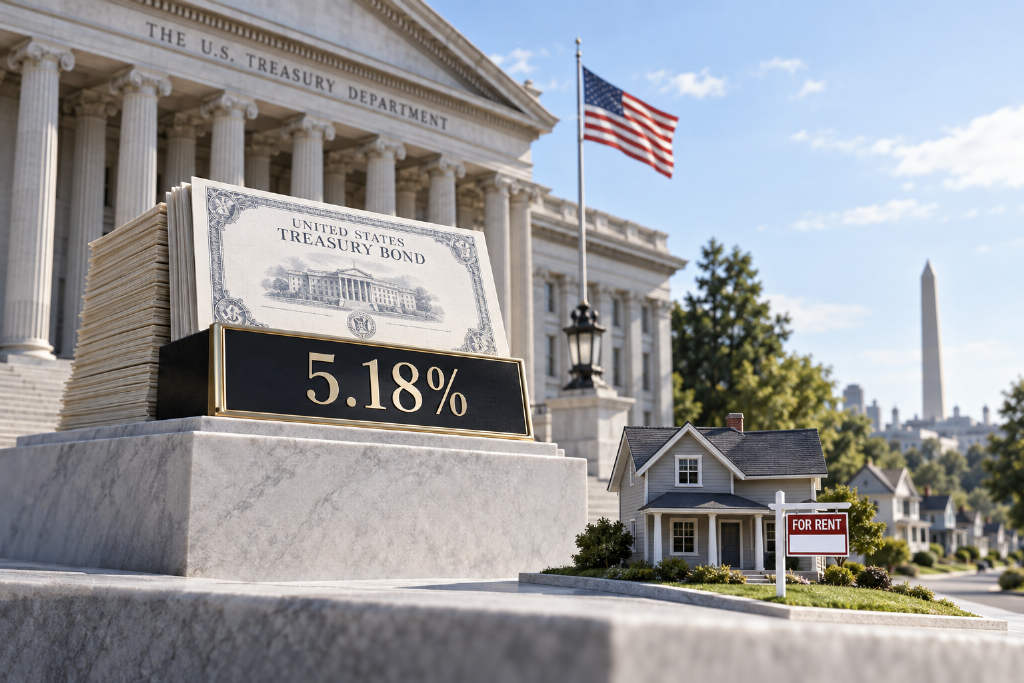
US Treasuries2026-09-25 09:52:2210-year US Treasury yields rise above single-family rental cap rates, Protos saysUS Treasuries are now offering higher headline returns than typical rental housing, according to Protos. The report says the 10-year US Treasury yield-to-maturity closed at 5.11% on Wednesday and moved up again to 5.18% on Thursday, overtaking a 4.8% single-family home rental cap rate calculated under a 45% expense load. Protos describes that gap as a negative housing spread, where low-risk government bonds outperform the riskier business of renting out residential property. The article says this relative profitability is at its highest level since July 2007. It also links the move in yields to an oil shock and a borrowing spree during the US war with Iran, followed by a recent Federal Reserve rate hike that pushed Treasury yields above levels seen during the 2007 housing bubble. Protos adds that Fed Chair Kevin Warsh announced the central bank’s first rate increase in three years last week, while the committee’s own projections pointed to one more increase in the Fed Funds Rate this year. Real estate data firm CEO Nick Gerli said income-focused property investing now carries a negative opportunity cost versus government bonds. He also noted that rental property returns can vary widely from year to year because repairs, occupancy, and other costs can sharply change realized performance.270
US durable go2026-09-25 12:35:42US Treasury yields rise after durable goods data releaseUS Treasury yields moved higher after the release of US durable goods data, according to a ChainCatcher newsflash. The 30-year US Treasury yield rose 1.85 basis points to 5.481%, while the 10-year yield climbed 2.36 basis points to 5.186%. The update focused on the immediate market move in long- and medium-term government bonds following the data release. No additional details were provided in the source beyond the change in yields and their latest levels. The item was published as a 7x24 newsflash by ChainCatcher.210